AI Can Start the Conversation — But Only a Human Can Close It

Introduction
There's a quiet tension happening inside boardrooms and marketing departments across Canada right now.
On one side: the undeniable power of artificial intelligence. AI can generate a lead-nurturing email sequence in seconds. It can appear in a Google AI Overview before your competitor has finished their morning coffee. It can answer a prospect's question at 2:00 AM, qualify them before your sales team arrives Monday morning, and score their likelihood to convert before they've even met you.
On the other side: the stubborn, irreducible fact that human beings don't buy from algorithms.
They buy from people they trust.
At Titan Marketing Solutions, we've built our entire philosophy around a simple but powerful truth — all transactions are Human to Human. Not B2B. Not B2C. H2H. No matter how sophisticated your tech stack gets, every dollar that changes hands does so because one human being decided they believed in another. And that belief cannot be manufactured by a machine.
But here's where it gets interesting: AI and the H2H philosophy are not enemies. In fact, when used correctly, AI becomes one of the most powerful tools a human-first business can deploy — not to replace relationships, but to create more space for them.
The key is knowing exactly where AI ends and where you begin.
What AI Does Brilliantly (And Where Most Are Using It Correctly)
Let's give credit where it's due. The first stage of any customer journey is getting found — and AI is transforming how that happens.
With the rise of Google's AI Mode, ChatGPT search, and Perplexity, the way a prospect first "meets" your business has fundamentally changed. Instead of clicking through ten blue links, they're asking a question and receiving a synthesized answer. If your business is mentioned, cited, and positioned correctly in that answer, you've just made a first impression without lifting a finger.
That's the Know phase of the H2H customer journey, and AI accelerates it dramatically.
Beyond search, AI plays a powerful role in:
- Lead qualification — chatbots and AI agents that gather information, ask the right questions, and pre-qualify prospects before a human ever picks up the phone
- Follow-up automation — nurture sequences that keep your brand visible between conversations, so you're never out of sight when the timing is right
- Content distribution — getting your expertise in front of the right people, on the right platforms, at the right moment
- Initial outreach — personalizing the first touchpoint at scale, making cold outreach feel warmer than it ever has before
Used well, AI compresses the early stages of the customer journey in ways that would have been impossible five years ago. A prospect can go from never having heard of you to understanding exactly what you do, consuming your content, and raising their hand for a conversation — all before a single human interaction takes place.
That's not a threat to H2H marketing. That's a gift. The problem starts when businesses mistake the opening act for the whole performance.
Where AI Falls Short — Every Single Time
Here's what the technology cannot do, no matter how sophisticated it becomes.
AI cannot look someone in the eye — even over a video call — and make them feel genuinely seen. It cannot listen to the pause in a prospect's voice when they mention they've been burned by agencies before. It cannot pick up on the subtle signal that the real concern isn't price — it's fear of making the wrong decision again. And it cannot respond to that fear with the kind of warmth, honesty, and human accountability that turns a skeptic into a believer.
The Trust phase and the Believe phase of the customer journey are, and will always be, irreducibly human.
Think about the last significant purchasing decision you made — a major service provider, a contractor, a marketing agency. Did you hand over your money because a chatbot answered your questions quickly? Or did you hand it over because something a person said — or did, or demonstrated — made you feel confident that they would actually deliver?
A 2026 Harris Poll found that 81% of Gen Z consumers — the most digitally native generation in history — wish it were easier to disconnect from digital experiences. Pinterest reported a 72% increase in searches for "digital detox ideas." The generation that grew up entirely online is now craving human connection more than any generation before them.
The market is telling us something. Authentic human connection is becoming the scarcest, most valuable resource in marketing.
The Handoff: The Most Critical Moment in Your Sales Process
If AI is the opening act, the handoff to a human is the moment everything either clicks — or collapses.
We see this play out constantly. A business invests in a sophisticated AI lead qualification system. Prospects flow in. Questions get answered. Appointments get booked. And then a salesperson shows up to the conversation completely unprepared for who they're speaking to, what that person actually needs, and what was already said in the AI-powered conversation that preceded them.
The prospect, who was genuinely interested, leaves feeling like just another number in a pipeline.
1. Your AI captures context, not just contact information.
A well-designed AI conversation should gather not just name and email, but the prospect's actual situation — what they're struggling with, what they've already tried, what success looks like to them. That context should be waiting for the human who takes over.
2. The transition feels seamless, not mechanical.
The prospect should never feel like they've been processed. A simple acknowledgment — "I've had a look at what you shared with our team and I wanted to personally reach out..." — bridges the gap between automation and relationship.
3. The human shows up as a human, not a closer.
The goal of the first real conversation isn't to sell. It's to deepen the connection that the AI started. Ask questions. Listen more than you talk. Let the prospect feel what it's actually like to work with you.
The Titan Approach: AI as the On-Ramp, Humans as the Destination
At Titan Marketing Solutions, we think about AI the way a great host thinks about a venue.
The venue can be stunning. It can be perfectly lit, expertly designed, precisely arranged. It creates the conditions for a great evening. But the venue doesn't make the connections. The people do.
AI is your venue. It creates the conditions — the visibility, the first impression, the initial qualification — for a human relationship to form. It works tirelessly while you sleep, positioning your brand exactly where your ideal client is looking, and starting conversations you'd never have the hours to start manually.
But the relationship? The trust, the belief, the decision to buy, the loyalty that generates referrals for years to come? That happens in the conversations between real people.
Our marketing systems are built on eight stages of the H2H customer journey — from the first moment a prospect discovers you all the way through to the moment they become your most enthusiastic referral source. And at every single stage, we ask the same question:
Where does AI accelerate this? And where does a human need to show up?
What This Means for Your Business Right Now
If you're investing in AI tools — chatbots, voice agents, automated outreach, AI search optimization — and you haven't invested equally in the human experience that follows those touchpoints, you are leaving your best opportunities on the table.
The businesses that will win in the next five years aren't the ones with the most sophisticated AI. They're the ones that use AI to have more human conversations, not fewer.
More targeted outreach means more time for deep conversations. More qualified leads means less wasted effort and more genuine relationship-building. More AI-generated visibility means more humans discovering a brand that actually shows up like a human when it matters.
That's the H2H advantage in an AI-powered world.
FAQ: AI & Human-to-Human Marketing
Common questions about balancing automation and connection.
About Paul Douglas
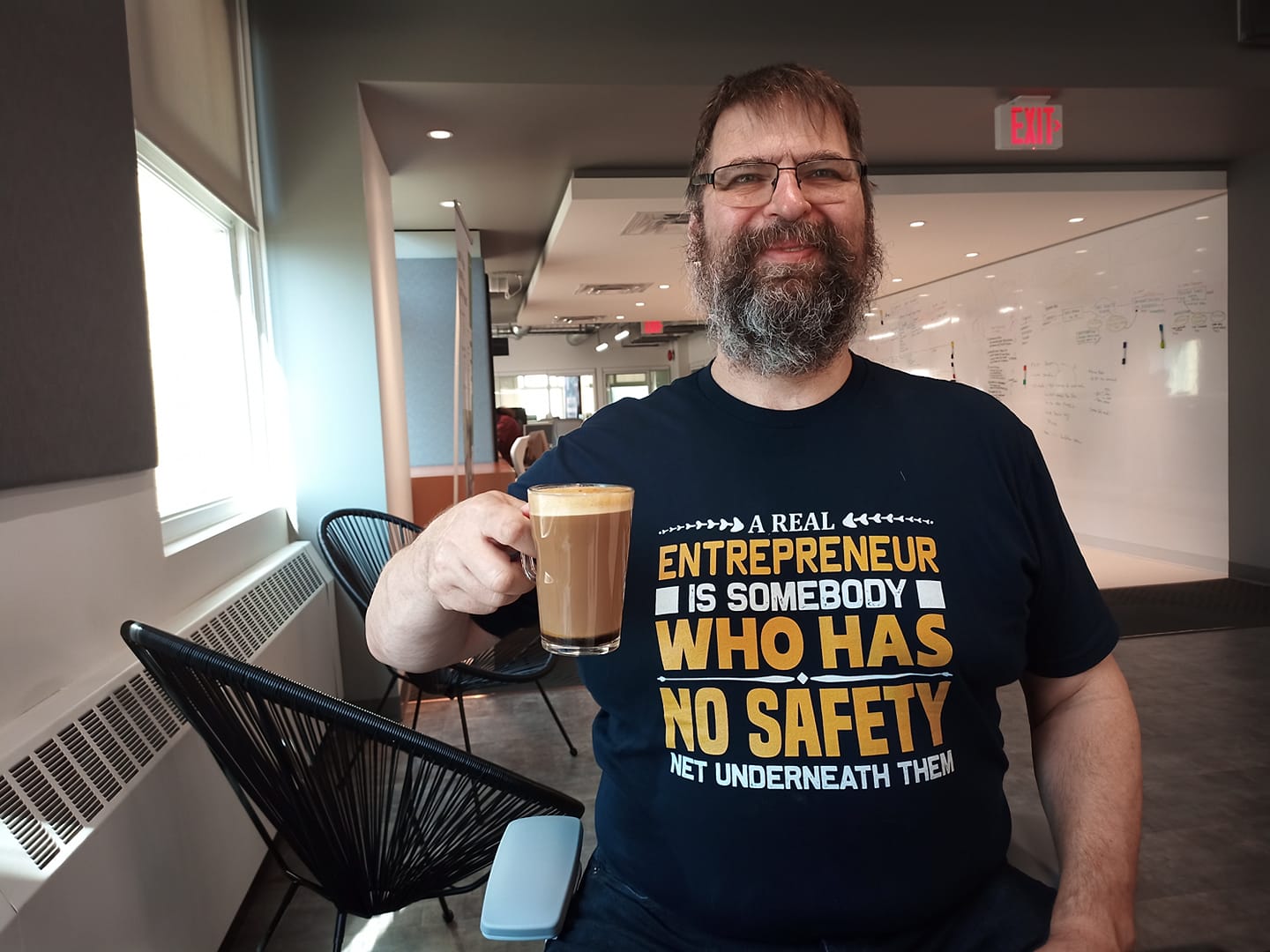
Paul Douglas is a lifetime entrepreneur and business owner, direct response marketer, digital marketing strategist, and best-selling author and publisher, and the co-founder of Titan Marketing Solutions.
He built his first website for his carpet cleaning business in 2003 and has built hundreds of websites since then. Paul has also co-authored a number one best-selling book on SEO titled Optimize This and has spoken on both national and local stages educating business owners about Digital Marketing.
Book a free consultationReady to Build a Marketing System That Combines Both?
At Titan Marketing Solutions, we help businesses across Canada build marketing systems that leverage the speed of AI and the power of human connection — together. No pitch. No pressure. Just an honest conversation.